As Jharkhand approaches the 2024 Assembly elections, the Simdega constituency emerges as a focal point of intense political maneuvering.
Known for its tribal dominance and significant Christian population, Simdega presents a complex electoral battleground where three political heavyweights – the Congress, BJP and Jharkhand Party (JP) are vying for supremacy.
The tribal-Christian equation, deeply entrenched in Simdega’s socio-political fabric, plays a critical role in shaping the electoral landscape.
The 2024 polls are anticipated to showcase a tight three-way contest, making Simdega a constituency to watch.
The Political Landscape of Simdega: A Triangular Contest
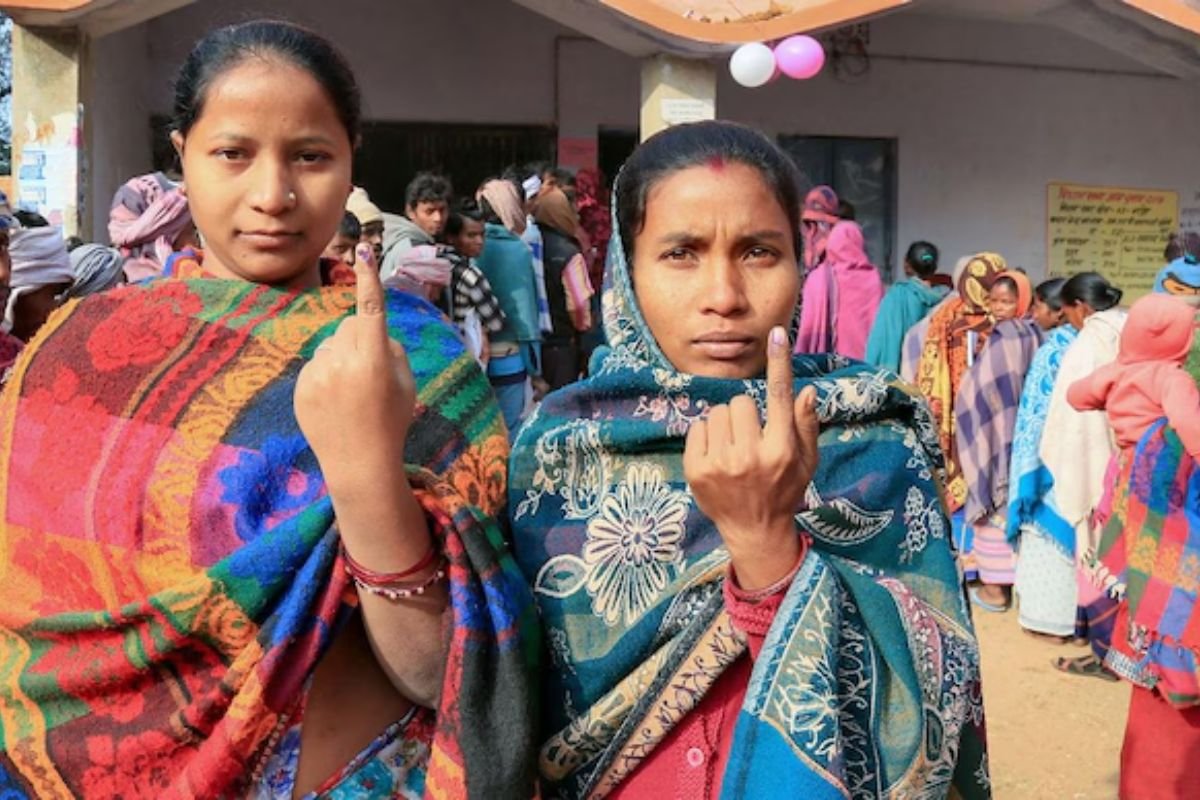
Simdega, part of Jharkhand’s western region, holds significant political value due to its large Scheduled Tribe (ST) population and Christian voters.
In 2019, Congress secured a narrow victory here, but the constituency remains politically fluid, with both the BJP and the Jharkhand Party preparing formidable challenges.
The Congress, battling internal discord, is looking to maintain its stronghold. However, the BJP, buoyed by sympathy votes and grassroots efforts, aims to upset the status quo.
Meanwhile, the Jharkhand Party, under the leadership of Irin Ekka, is gaining momentum, positioning itself as a potential disruptor that could swing the election in unexpected directions.
Geopolitical and Social Composition of Simdega
Simdega is one of the 81 constituencies in Jharkhand, but it stands out due to its unique demographic profile.
About 62% of the population belongs to Scheduled Tribes, while Christian voters make up 58% of the electorate, making the tribal-Christian equation a decisive factor in every election cycle. The Khadia community, with its 30,000 strong voters, is a key influencer in the region, particularly among tribal voters.
Simdega’s electorate is divided into several other tribal groups, each with distinct political preferences, which contributes to the constituency’s electoral complexity.
Additionally, a small but influential non-tribal OBC segment has historically supported the BJP, though recent dissatisfaction within this voter group poses a challenge to the party.
Congress Party: Internal Struggles and Emerging Candidates
Congress has traditionally performed well in Simdega but is now confronting internal strife, which could jeopardize its standing.
Bhushan Bada, the sitting MLA, secured victory by a mere 285 votes in the 2019 election. His tenure, marred by dissent both within the party and among constituents, leaves the Congress vulnerable.
Several candidates are vying for the Congress ticket, reflecting the party’s uncertainty about its future direction in Simdega. Among the top contenders are:
The Congress’ decision on its candidate is complicated by the Church’s significant influence in deciding voter preferences.
Any misstep in candidate selection could weaken its grip on the Christian vote, a pivotal demographic in this election.
BJP’s Strategy: Sympathy Vote and Strong Groundwork
The BJP has been steadily building its support base in Simdega, despite losing narrowly to Congress in the last election.
Shraddhanand Besra, who came within 285 votes of victory in 2019, remains a potent force, riding a wave of sympathy from his close defeat.
His deep ties with the community and persistent presence in the region have kept him in the running for the BJP ticket.
Other potential candidates for the BJP ticket include:
The BJP’s challenge, however, extends beyond internal jockeying for the ticket.
Growing discontent among OBC voters, exacerbated by recent high-profile resignations in neighboring Gumla district, poses a potential setback.
If OBC discontent spills over into Simdega, it could erode the BJP’s traditional voter base, weakening its chances.
The Rise of Irin Ekka and the Jharkhand Party (JP)
The Jharkhand Party, led by Irin Ekka, daughter of former minister Enos Ekka, has emerged as a significant player in Simdega.
Gaining traction among Christian voters, particularly with strong backing from the Church, Irin Ekka is poised to disrupt the traditional two-party dynamics between Congress and BJP.
Ekka’s rise is particularly notable because the Jharkhand Party has historically been seen as a fringe player. However, with Irin Ekka at the helm, the party is making strategic inroads, capitalizing on disenchantment with both Congress and BJP.
She has successfully positioned herself as a fresh alternative, with a strong message of tribal empowerment and local representation.
Social Equations and Political Dynamics
At the heart of Simdega’s electoral landscape is the complex interplay between tribal identity and religious affiliation.
While a majority of voters identify as both tribal and Christian, their political leanings are not monolithic.
Voter behavior often fluctuates based on candidate selection, party policies, and grassroots campaigning.
Conversion to Christianity has been a defining feature of Jharkhand’s tribal communities for decades, but its political influence remains largely confined to certain areas.
In Simdega, the Church wields considerable power, especially when it comes to shaping electoral outcomes.
As the 2024 elections approach, all three major political parties – Congress, BJP and Jharkhand Party are vying for the Church’s support, recognizing its pivotal role in mobilizing the Christian vote.
Another critical factor is the relationship between tribal communities and political representation. For many tribal voters, the party’s stance on tribal rights and local development takes precedence over national issues.
This focus on local governance and empowerment shapes much of the political discourse in Simdega.
Non-tribal OBC voters, though smaller in number, have traditionally aligned with the BJP.
However, recent discontent, stemming from perceived neglect and lack of political representation, could weaken this alliance, further complicating the electoral equation.
Conclusion: A Tight Triangular Contest
As the 2024 Jharkhand Assembly elections draw nearer, Simdega’s political landscape remains in flux.
With Congress battling internal discord, BJP pushing hard to capitalize on sympathy votes and grassroots connections and the Jharkhand Party rapidly rising under Irin Ekka’s leadership, the constituency is poised for a fiercely contested triangular battle.
If Congress sticks with incumbent Bhushan Bada, BJP’s Shraddhanand Besra may hold an edge due to his strong community presence and the sympathy factor.
However, if Congress opts for a fresh candidate like Ajit Navrangi, who has garnered considerable support within the Christian community, the race could tighten.
Similarly, the BJP’s choice between Besra, Pradhan, and Baraik will significantly influence its prospects.
Meanwhile, the Jharkhand Party’s potential to split votes, particularly from Congress, adds an unpredictable element to the contest.
Should Irin Ekka continue to gain ground, she could emerge as a kingmaker in this tightly contested race.
Ultimately, the outcome in Simdega will depend on a delicate balance of tribal, Christian and OBC votes, and the strategic decisions made by each party in the coming months.
As the polls near, Simdega is set to become a critical battleground in Jharkhand’s 2024 Assembly elections.